
From Despair to Strength: What One Man’s Survival Can Teach Us Today
You can also read this article in Psychology Today here
Hello there,
It’s been a rough time in the world. We need to continue advocating for peace and finding solutions without war or violence. Sometimes I feel very frustrated about what is going on (such as, for example, every day).
In these challenging times, when speculation about the effects of AI comes in as many forms as a possible ChatGPT response, many people feel unsure about the direction the world is moving in, which produces a lot of anxiety.
I hope after reading the following article, you will agree with me that one of the most understudied and underutilized strategies available to us to weather these difficult moments is … acceptance. Not acceptance as passivity, but as a means of accessing the real information we need to make the right decisions about how we will work to improve what’s happening outside our doors.
To the happiness, success and meaning in your life,
Anthony
—

First, the social distancing of the pandemic.Now, increased social disconnection and distrust. Economically, a system in which the distance between haves and havenots has widened to untenable proportions: in the twenty-nine years from 1989 to 2018, CEOs went from earning 58 times as much as the average employee’s salary to 278 times their salary
Politically, no better. Ruthless, narcissistic politicians spewing divisive rhetoric abetted by a technology industry that profits from fomenting our discord.
The Black Eyed Peas refrain Where is the Love? seems as good as any to describe the world we now occupy and are leaving to our children.
What can you do in the face of these formidable obstacles to living a meaningful life with your fellow citizens of this world?
Accept it.
“What?!!” Are you kidding?”
About to read no further? Meet Bill.
Fall from Grace
Bill was happily married in his comfortable suburban home in the Midwest with his wife and two children when the Vietnam War (called the “American War”in Vietnam) intruded. A few months after deploying there, he was captured. He soon found himself emaciated, starved, and desperately trying to survive in a windowless, mosquito- and rat-infested cell, his entire previous life an evanescent memory.
Bill refused to accept what his life had become. Until one day, a day like any other in the terrible succession of his days in captivity, when a loud voice he could not identify startled him. “This is your life,” it said.
Whether Bill heard this voice or not is not that important; what matters is that he believed he heard it. “There is no truth,” wrote the French novelist Gustave Flaubert. “There is only perception.” Bill’s new perception changed what he perceived to be true.
“When I heard this voice, things changed,” Bill told Yale Medical School psychologist Steven Southwick. At the moment he accepted his present reality, Bill’s life took a sharp upward turn.
Once Bill truly acknowledged that he was a POW in Vietnam, once he accepted that his life had been reduced to a fight for survival, he could own his life again instead of struggling psychologically against the dramatic turn it had taken and feeling like the victim of external forces.
“When I really admitted it to myself, I just kind of stopped fighting and things got a lot better,” Bill continued. “I always knew I was in prison, but after that voice, it just changed. I just wasn’t as miserable anymore, and I started to take care of business … I started to exercise as much as I could, and I tried to stay in touch with some of the guys.”
The Power of Acceptance
“Bill’s inspiring story notwithstanding, I am unwilling to condone what some really selfish, short-sighted people are doing these days,” you might be thinking. “Acceptance sounds like a recipe for passivity and preserving the status quo.” The first statement is admirable; the second, a common misconception about acceptance.
Acceptance refers to “the willingness to openly experience thoughts, feelings, physical sensations, and life events.” Acceptance means accepting others not as you would like them to be, but as they are. Amidst challenging circumstances, acceptance is one of the most critical steps you can take to preserve your well-being.
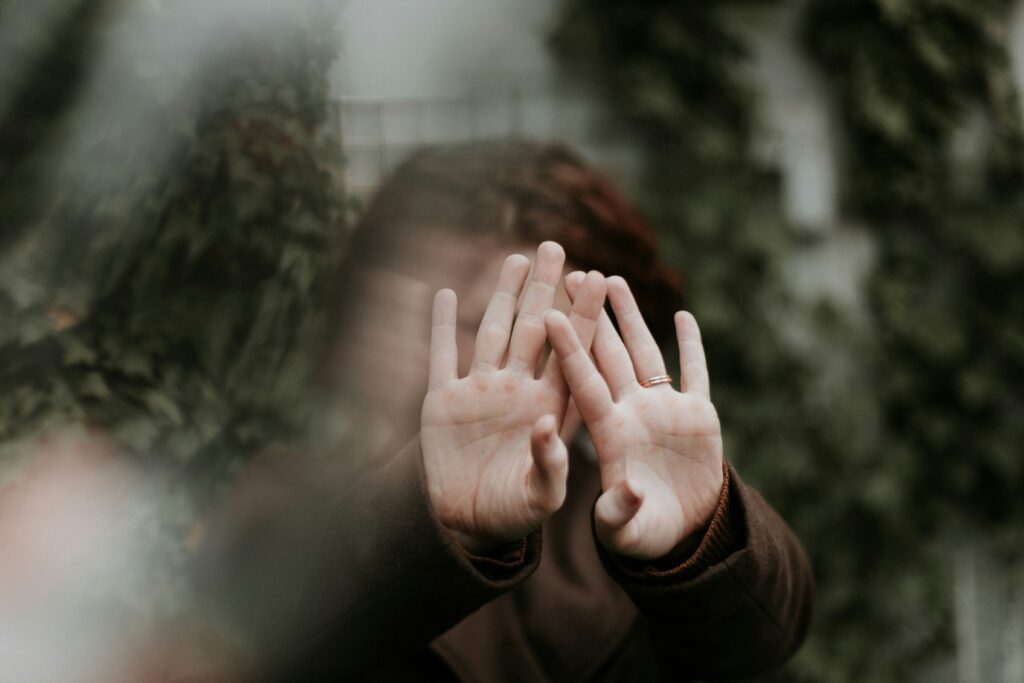
A study of mothers of children undergoing bone transplants to survive cancer, for instance, a highly painful and invasive medical procedure, found that the mothers who had accepted their children’s situation were less depressed. Another study of Americans after 9/11 revealed that those who had accepted the current situation were less traumatized by it.
You Can Run But You Can’t Hide
The opposite of acceptance is avoidance, which is classified as a key symptom or characteristic of various mental disorders—such as avoidant personality disorder and social anxiety disorder—in the Diagnostic and Statistical Manual of Mental Disorders (DSM-5).
Avoidance has been described as the “unwillingness to remain in contact with private experiences such as painful thoughts and emotions.” Ever since Freud, avoidance has been associated with the repression of unwanted thoughts into the unconscious, a precursor of psychopathology.
What Now?
“OK, I get it,” you may be thinking. “But what can I do to accept what’s going on even though it turns my stomach?”
As hard as it is to do, once you accept and make peace with your feelings—whether they be frustration, anxiety, disillusionment, even disgust—you gain the precise power you need to initiate self-directed change. Finding your peace within through acceptance when so much of what you value is crumbling outside is an unprecedented challenge to which you have the power to rise.
Give acceptance a chance—as your first step toward dedicating yourself to working toward the social change the rest of us need you to create.
———-
To listen, click here.
If you have enjoyed this article, you can receive similar articles by Dr. Anthony Silard in your email inbox. Every two weeks, we send the latest issue of The Art of Living Free Newsletter to over 300,000 people in our global community. Please join us!